
Cat6a twisted-pair copper cabling has gained significant popularity in recent years due to its ability to support 10GbE networks, Power over Ethernet (PoE) applications, and wireless access points (APs). As users demand higher bandwidth and better network performance, Cat6a cables have become a preferred choice for data centers, enterprises, educational institutions, healthcare facilities, and more. This article explores the differences between shielded and unshielded Cat6a cables and provides guidance on how to choose the appropriate cable type for your network needs.
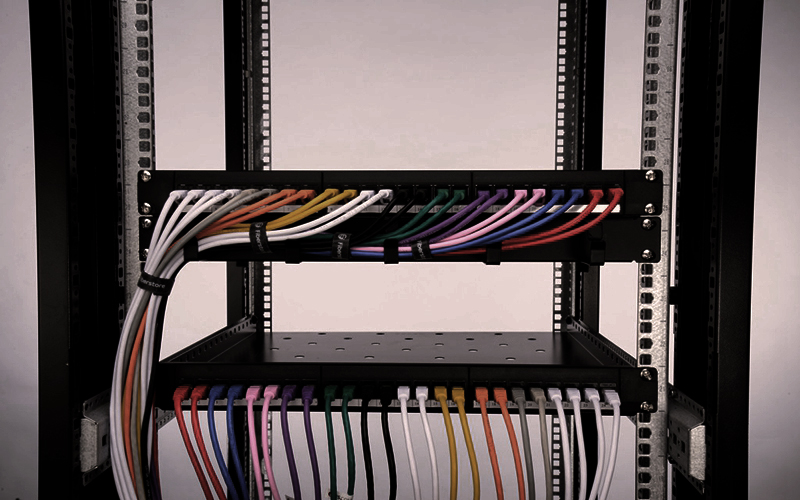
Cat6a, or Category 6a, cable is an enhanced version of Cat6 cable capable of supporting data transfer rates of up to 10Gbps and a maximum bandwidth of 500MHz. It features additional and tighter twists with enhanced insulation to reduce crosstalk, ensuring improved signal integrity and data transmission. Cat6a is backward compatible with Cat6 and Cat5e cables, making it a versatile and future-proof cabling solution for high-performance networks.
Cat6a cables come in two main variants based on their shielding types: shielded twisted pair (STP) and unshielded twisted pair (UTP). While both types aim to provide reliable connectivity, they differ in design, manufacturing, and performance characteristics.
Cat6a unshielded twisted pair cables consist of four sets of twisted pairs, with each bare copper conductor insulated and color-coded. The cables are bundled together under an overall jacket, usually made of PVC. Each pair of cables within the bundle has a different twist rate to minimize crosstalk and ensure optimal data transmission. Advantages of Cat6a UTP Cables: - Simple termination process with no shielding or drain wire involved, reducing termination time and cost. - More flexible and easier to install compared to shielded cables.
Cat6a shielded twisted pair cables include a shield within the cables to prevent electromagnetic interference (EMI) and radio-frequency interference (RFI) from affecting cable performance. This shielding also prevents cable signals from interfering with surrounding cables and equipment. Properly installed Cat6a shielded cables automatically curb EMI and crosstalk, ensuring data integrity and high-speed performance. Advantages of Cat6a STP Cables: - Superior protection against electromagnetic and radio-frequency interference, making them suitable for high-interference environments. - Ensures stable and reliable network performance in industrial facilities, data centers, and other complex setups. Note: Shielded and unshielded Cat6a cables are not interchangeable. Devices connected to shielded cables must also be shielded and grounded, including couplers, jacks, and network controllers.
To better understand the differences between shielded and unshielded Cat6a cables, let's compare them based on several key factors:
| Factors | Cat6a Shielded Cable (STP) | Cat6a Unshielded Cable (UTP) |
|---|---|---|
| Interference Protection | Provides superior protection against EMI and RFI, ideal for high-interference environments. | May be susceptible to interference in certain environments but suitable for low-interference settings. |
| Cost | Generally more expensive due to the added shielding material and specialized termination requirements. | Cost-effective solution, cheaper to purchase, and easier to install. |
| Flexibility and Installation | Stiffer and less flexible due to added shielding, potentially more challenging to install in tight spaces. | More flexible and easier to install, making them suitable for various network setups. |
| Grounding Requirement | Must be properly grounded to work effectively. | Does not require grounding. |
When selecting between Cat6a shielded and unshielded cables for your network, consider the following factors: 1. **Interference Level**: In environments with high levels of interference, such as industrial facilities, data centers, or locations near power lines, opt for shielded Cat6a cables to ensure stable and reliable performance. 2. **Cost and Budget**: If budget is a concern and your environment has minimal interference, unshielded Cat6a cables offer a cost-effective solution without compromising performance. 3. **Flexibility and Installation**: For installations in tight spaces or complex network setups, unshielded Cat6a cables are more flexible and easier to install. Shielded cables may be more challenging to install in such scenarios. 4. **Grounding Requirement**: Keep in mind that shielded Cat6a cables must be properly grounded to provide the desired level of interference protection.
In conclusion, Cat6a twisted-pair copper cabling offers excellent support for 10GbE networks, PoE applications, and wireless access points. When choosing between Cat6a shielded and unshielded cables, consider your cabling environment, the level of interference, installation requirements, and budget constraints. A carefully chosen Cat6a cable solution will provide a future-proof and high-performance network infrastructure, ensuring data integrity and transmission efficiency for years to come.
Address : 5F,Zhongshunyiquan Industry Park, Fuqian Road,Longhua District, Shenzhen, China
Address : 5F,Zhongshunyiquan Industry Park, Fuqian Road,Longhua District, Shenzhen, China
Tel : +86-755-23771707
Whatsapp : +86 13544277727
Email : sales@gezhi.net
Skype : 13544277727
Copyright Gezhi Photonics Co.,Ltd. All rights reserved.


