
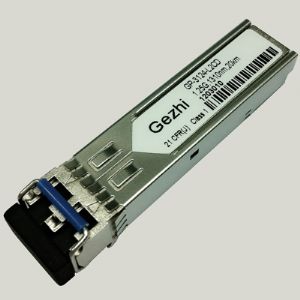
In the ever-evolving world of data transmission, selecting the right fiber optic form factor for your network is crucial. It not only ensures proper functionality but also optimizes your budget. This article aims to provide you with a comprehensive comparison of five popular form factors: SFP, SFP+, SFP28, QSFP+, and QSFP28.
| Optics Type | Standard | Data Rate | Wavelength | Fiber Type | Max Distance | Typical Connector | DOM | Operating Temperature |
|---|---|---|---|---|---|---|---|---|
| SFP | SFP MSA | 155Mbps to 4.25Gbps | 850nm, 1310nm, 1550nm, CWDM, DWDM, BIDI | OM1, OM2, OS1, OS2 | Up to 160km | LC, SC, RJ-45 | NO or YES | Commercial/Industrial |
| SFP+ | IEE802.3ae, SFF-8431, SFF-8432 | 6Gbps to 10Gbps | 850nm, 1310nm, 1550nm, CWDM, DWDM, BIDI, Tunable, Copper | OM3, OM4, OS1, OS2 | Up to 120km | LC, RJ-45 | YES | Commercial/Industrial |
| QSFP+ | IEEE 802.3ba, QSFP+ MSA, SFF-8436, SFF-8636, Infiniband 40G QDR | 41.2Gbps | 850nm, 1310nm, 832-918nm | OM3, OM4, OS1, OS2 | Up to 40km | LC, MTP/MPO | YES | Commercial/Industrial |
| SFP28 | IEEE 802.3by, SFP28 MSA, SFF-8472, SFF-8432 | 25.78Gbps | 850nm, 1310nm | OM3, OM4, OS1, OS2 | Up to 10km | LC | YES | Commercial/Industrial |
| QSFP28 | IEEE 802.3bm, QSFP28 MSA, SFF-8665, SFF-8636 | 103Gbps, 112Gbps | 850nm, 1310nm, CWDM4 | OM3, OM4, OS1, OS2 | Up to 80km | LC, MTP/MPO-12 | YES | Commercial/Industrial |
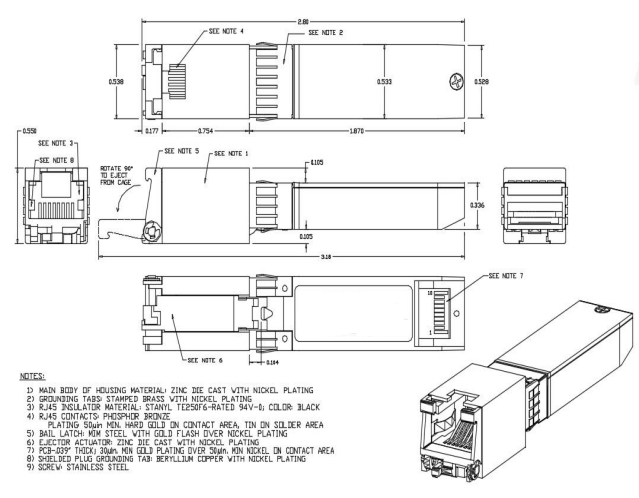
Both SFP and SFP+ share the same form factor but vary significantly in terms of speed and compatibility. SFP+ modules are designed for 10-Gigabit Ethernet applications, while SFP modules cater to 100BASE or 1000BASE applications. SFP+ ports can accept SFP optics but at a reduced speed of 1 Gbit/s, and SFP+ transceivers should not be inserted into SFP ports as it may cause damage.
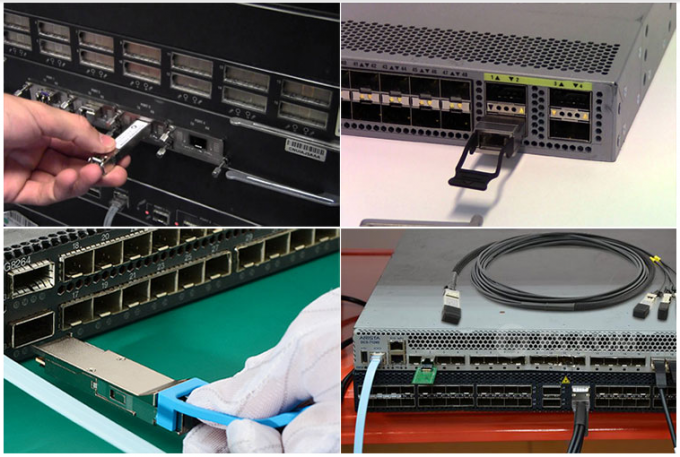
The main difference between SFP+ and SFP28 lies in their data transmission rates. SFP+ is predominantly used in 10G networks, whereas SFP28 is more commonly associated with 25G networks. Despite these differences, SFP28 modules are backward compatible with SFP+ ports, but at a reduced speed of 10 Gbit/s.
QSFP+ modules are an evolution of SFP+, providing four 10 Gbit/s channels for carrying 10-Gigabit Ethernet, 10G Fiber Channel, or InfiniBand. This gives QSFP+ an edge over SFP+ in terms of throughput and port density, resulting in overall system cost savings.
Though different in size and working principles, both SFP28 and QSFP28 can be employed in 100G networks. SFP28 supports a single channel with 25 Gbit/s, while QSFP28 offers four 25 Gbit/s channels. For 100G networks, SFP28 is commonly used in QSFP28 to SFP28 breakout solutions. In conclusion, the evolution of optical transceivers is primarily driven by the need for higher bandwidth and smaller form factors. When choosing between these form factors, consider not just your current network traffic and transmission distance, but also future networking requirements.

This article does not mention any competitor's name, and where necessary, the term "Gezhi" is used. Please verify all details on the Gezhi Photonics website before making a purchase decision.
Address : 5F,Zhongshunyiquan Industry Park, Fuqian Road,Longhua District, Shenzhen, China
Address : 5F,Zhongshunyiquan Industry Park, Fuqian Road,Longhua District, Shenzhen, China
Tel : +86-755-23771707
Whatsapp : +86 13544277727
Email : sales@gezhi.net
Skype : 13544277727
Copyright Gezhi Photonics Co.,Ltd. All rights reserved.


