
Modern networking operations are characterized by the demand for high-speed, high-capacity data transmission. To meet this demand, the telecommunications industry has turned to fiber optics, a technology that uses light to transmit data at speeds and capacities far greater than traditional copper cables. A key component in fiber optic systems is the fiber optic pigtail, a small yet indispensable part of the overall networking architecture.
A fiber optic pigtail is a short, usually unjacketed, optical fiber cable that has a factory-installed connector on one end and a length of exposed fiber at the other. The connector end can be linked directly to network equipment, while the exposed end can be spliced to another fiber optic cable. Fiber optic pigtails are crucial in facilitating the termination of fiber optic cables, with their usage being a commonplace in optical fiber management systems, distribution boxes, and fiber terminal boxes.

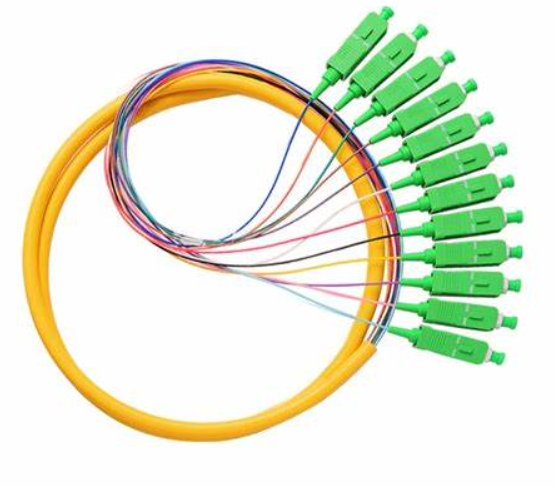
Often, there may be a confusion between fiber optic pigtails and fiber patch cords due to their structural similarities. However, the main distinguishing factor lies in their termination ends. A fiber optic pigtail has a connector only on one end, leaving the other end free, whereas a fiber patch cord has connectors on both ends. Also, fiber patch cords are usually jacketed to protect the fiber, while pigtails are often not, due to their common location in splice trays where extra protection isn't necessary.
Interestingly, a fiber patch cord can be effectively divided into two fiber optic pigtails by cutting it in the middle, a practice preferred by some installers. The advantage of this approach lies in the ease of testing: installers can test the whole fiber patch cord before severing it, ensuring optimal performance from the resultant pigtails.
Given the wide range of applications and systems in which they are used, fiber optic pigtails come in various types, differentiated by connector type, fiber type, and fiber count. Below are brief descriptions of these categories.
Fiber Type
Fiber optic pigtails can be divided into single-mode and multimode fibers. Single-mode fiber pigtails, identified by their yellow color, use a 9/125 micron cable and are terminated with a single-mode fiber connector. Conversely, multimode fiber pigtails, usually orange, use a 62.5/125 micron or a 50/125 micron bulk multimode fiber cable, terminated with a multimode fiber optic connector. Additionally, 10G multimode fiber cables (OM3 or OM4) are available, with the jacket color for these pigtails typically being aqua.
Connector Type
Fiber optic pigtails are manufactured with a wide range of connectors to accommodate different applications and systems. Some of the common connector types include LC, SC, ST, FC, MT-RJ, E2000, and more. Below, we explore three of the most widely used connectors:
SC Fiber Optic Pigtail: Known for its simplicity and low-cost, the SC connector is a non-optical disconnect connector that comes with a 2.5mm pre-radiused ferrule, either in zirconia or stainless alloy. Its practicality and affordability make it a popular choice for applications such as CATV, LAN, WAN, and test and measurement systems.
FC Fiber Optic Pigtail: The FC connector boasts a screw type structure and high precision ceramic ferrules, leveraging the metallic body of FC optical connectors for superior performance. It's widely used across many general applications.
ST Fiber Optic Pigtail: The ST connector, the most popular choice for multimode fiber optic LAN applications, comes with a long 2.5mm diameter ferrule made of ceramic, stainless alloy, or plastic. ST fiber optic pigtails are typically used in telecommunications, industry, medical, and sensor fields.
Like fiber optic patch cords, fiber optic pigtails can be categorized into UPC and APC versions based on the type of polish of the fiber end-face. The commonly used types are SC/APC, FC/APC, and MU/UPC pigtails.
Certain application environments require special types of fiber optic pigtails. Two of the most common types for such situations are armored and waterproof pigtails.
Armored Pigtails: Encased in a stainless steel tube or other strong metal within the outer jacket, armored pigtails are designed to provide additional protection to the fiber inside and enhance network reliability. They help mitigate potential damage caused by factors such as rodents, construction work, and the weight of other cables.
Waterproof Pigtails: With a stainless steel reinforced waterproof unit and armored outdoor PE (Poly Ethylene) jacket, waterproof pigtails are built to withstand harsh conditions. They are ideal for use in challenging environments such as communication towers, CATV, and military installations. They have excellent toughness, tensile strength, and reliable performance, making them suitable for outdoor connections.
Fiber Count
Fiber optic pigtails come in a variety of fiber counts, including 1, 2, 4, 6, 8, 12, 24, and 48 strands. A simplex fiber optic pigtail, for example, has a single fiber and a connector on one end, while a duplex fiber optic pigtail has two fibers and two connectors. Each fiber is marked “A” or “B”, or different colored connector boots are used to mark polarity. Similarly, 4, 6, 8, 12, 24, and 48 fiber optic pigtails have their corresponding features.
Though small in size, fiber optic pigtails play a vital role in fiber optic cable termination. This is primarily achieved through fusion or mechanical splicing, the choice of which may depend on the tools available and the specific application requirements.
Fusion Splicing: If a fusion splicer is available, the pigtail can be spliced directly onto the cable in under a minute. This method offers a quick, high-quality splice that saves significant time and costs associated with field termination.
Mechanical Splicing: This method involves holding a fiber optic pigtail and fiber patch cord together precisely. The joint can be either temporary or permanent, and it enables light to pass from one fiber to the other.
In the realm of fiber optics, understanding the various components and their roles is crucial to ensuring a high-performance network. One such essential component is the fiber optic pigtail. What exactly are they? What types are available? How are they used and spliced? To address these questions, we've prepared this comprehensive guide. Let's delve into the world of fiber optic pigtails.
A fiber optic pigtail is essentially a fiber optic cable with a pre-installed factory connector on one end and the other left open. This design allows the connector side to be easily connected to equipment, while the other side can be spliced to other fiber optic cables. It's a commonly utilized method to terminate fiber optic cables via fusion or mechanical splicing, providing optimal performance for fiber optic cable terminations when carried out with high-quality pigtail cables and proper fusion splicing practices. You will find fiber optic pigtails widely used in fiber optic management equipment like optical distribution frames (ODF), fiber terminal boxes, and distribution boxes.
A common question in fiber optics is the difference between a fiber optic pigtail and a fiber patch cord. The key difference lies in the way they are terminated: a fiber optic pigtail has a connector installed at only one end, while a fiber patch cord has connectors installed at both ends. Fiber patch cords are typically jacketed, whereas fiber pigtails are usually unjacketed because they are often spliced and protected in a fiber splice tray. This difference allows patch cord fibers to be cut into two pieces to create two pigtails - a practice favored by some installers to circumvent the need for testing pigtail cables in the field. Instead, they test the fiber patch cord's performance before cutting it into halves to serve as two fiber pigtails.
Fiber optic pigtails are available in a variety of types, which can be categorized by connector type, fiber type, and fiber count. Here's a quick look at the classifications:
Fiber optic pigtails can be split into two categories: single-mode (yellow) and multimode (orange). Multimode fiber optic pigtails utilize 62.5/125 micron or 50/125 micron bulk multimode fiber cables and are terminated with multimode fiber optic connectors at one end. There are also 10G multimode fiber cables (OM3 or OM4) available. The jacket color of 10G OM3 and OM4 fiber optic pigtail is typically aqua. Single-mode fiber pigtails employ 9/125 micron single-mode fiber cables and are terminated with single-mode fiber connectors at one end.
Fiber optic pigtails come with a variety of pigtail cable connectors at the end. These include the LC, SC, ST, FC, MT-RJ, E2000, and other types. Each comes with its own structural and aesthetic advantages, making them suitable for different applications and systems. SC fiber optic pigtails are economical and widely used in CATV, LAN, WAN, test, and measurement applications. FC fiber pigtails take advantage of the metallic body of FC optical connectors and are highly popular for general applications. ST fiber optic pigtails are a favorite for multimode fiber optic LAN applications and are commonly seen in telecommunications, industry, medical, and sensor fields.
Some pigtails are designed specifically to endure harsh or extreme environments. As such, armored fiber pigtails and waterproof fiber pigtails are made available.
Armored Pigtails: Encased with a stainless steel tube or other sturdy material inside the outer jacket, armored fiber optic pigtails provide extra protection for the fiber inside and added reliability for the network. They are designed to minimize potential damage caused by rodents, construction work, or the weight of other cables.
Waterproof Pigtails: Featuring a stainless steel reinforced waterproof unit and armored outdoor PE (Poly Ethylene) jacket, waterproof fiber pigtails are suitable for harsh environments like communication towers, CATV, and military applications. They are designed for durability, tensile strength, and reliable performance, facilitating use in outdoor connections.
Fiber optic pigtails can have 1, 2, 4, 6, 8, 12, 24, or 48 strand fiber counts. Simplex fiber optic pigtail has one fiber and a connector on one end. Duplex fiber optic pigtail has two fibers and two connectors on one end. Each fiber is marked "A" or "B" or different colored connector boots are used to mark polarity. Similarly, 4, 6, 8, 12, 24, 48, and other fiber optic pigtails have their corresponding characteristics.
The quality of a fiber pigtail is usually high as the connectorized end is attached in the factory, making it more accurate than field-terminated cables. Fiber pigtails can be attached to optical fibers via fusion or mechanical splicing. If you have access to a fusion splicer, you can splice the pigtail directly onto the cable in under a minute, significantly speeding up the process and saving on field termination time and costs. On the other hand, mechanical fiber optic pigtail splicing accurately aligns a fiber optic pigtail and fiber patch cord together, enabling light to pass from one fiber to the other. The joint could be temporary or permanent.
Address : 5F,Zhongshunyiquan Industry Park, Fuqian Road,Longhua District, Shenzhen, China
Address : 5F,Zhongshunyiquan Industry Park, Fuqian Road,Longhua District, Shenzhen, China
Tel : +86-755-23771707
Whatsapp : +86 13544277727
Email : sales@gezhi.net
Skype : 13544277727
Copyright Gezhi Photonics Co.,Ltd. All rights reserved.


