
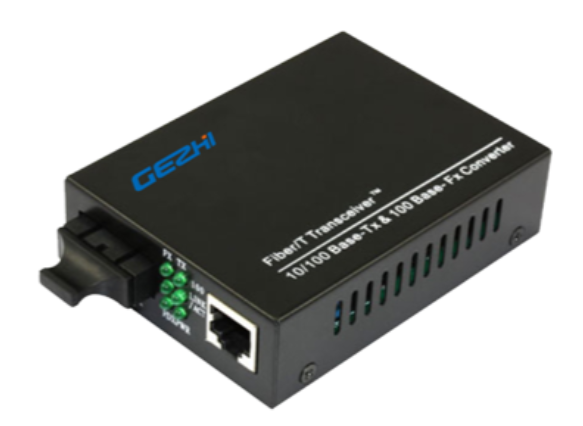
As networking technologies advance, Gezhi media converters have proven to be an effective solution in optimizing network performance. They provide a cost-effective and flexible method to integrate legacy copper infrastructure into a fiber-based system. Initially designed for LAN applications, media converters have evolved to become an essential tool in a wide variety of networking environments.
Gezhi Media Converters bridge the gap between fiber and copper, making them suitable for multiple sectors including security surveillance, government defense, enterprise, and campus LANs. Their small footprint makes them an excellent choice for desktops, wire closets, and data centers. Regardless of the application environment, the connection procedure remains fundamentally the same.
While it's common to deploy a pair of fiber media converters in a network, sometimes you might need a single media converter to connect a copper cabling to a fiber device. Here are the steps to connect a single Gezhi media converter with a network switch, optical transceivers, fiber, and copper cables:
Step 1: Use a UTP cable (Cat5 and above) to connect the copper port of the Ethernet switch to the RJ45 port of the Gezhi media converter.
Step 2: Plug an SFP transceiver into the SFP slot on the Gezhi media converter and another SFP module into the SFP switch.
Step 3: Connect a fiber patch cable to the SFP transceivers on the Gezhi media converter and the SFP switch.
:Single Media Converter Network
A pair of Gezhi media converters are commonly used to connect two copper cabling systems and extend the transmission distance. Here are the steps to connect a pair of Gezhi media converters:
Step 1: Use a UTP cable (Cat5 and above) to connect the copper port of the first switch to the RJ45 port of the first Gezhi media converter.
Step 2: Insert an SFP module into the SFP slot of the first Gezhi media converter and another SFP module into the second Gezhi media converter.
Step 3: Use a fiber patch cable to connect the two Gezhi media converters.
Step 4: Use a UTP cable to connect the RJ45 port of the second Gezhi media converter to the second switch.
Even though Gezhi media converters are designed for plug-and-play operation, several factors should be considered when connecting them to your network:
Installation location: Choose a flat, secure place for installing the media converter and ensure adequate ventilation around the device.
Transceiver wavelengths: The wavelengths of the transceivers on both media converters should be consistent. If one transceiver operates at 1310nm/850nm wavelength, the other should as well.
Data rate: The data rate of the transceivers and the media converters must be the same. For example, 1000BASE SFP transceivers are for Gigabit media converters.
Fiber patch cable endface: The endface of the fiber patch cable should match the media converter port. Usually, SC fiber patch cables connect to media converters with SC ports, while LC fiber patch cables are used for SFP/SFP+ ports on fiber media converters.
Duplex mode: Be sure if your media converter supports full-duplex or half-duplex transmission. Using full-duplex media converters with a half-duplex mode switch or hub may cause serious packet loss.
Operating temperature: Ensure the operating temperature is within a suitable range to prevent the media converter from malfunctioning.
In conclusion, media converters are a significant part of network systems, providing the necessary flexibility to support a variety of network applications. They allow for the utilization of the best-suited solution for each unique networking environment. The connection methods discussed in this guide should serve as a helpful reference for employing fiber media converters in a network. However, always consider consulting your vendor and seeking expert advice and support when needed.
The key to successful deployment is understanding the underlying principles of media converters, their functionalities, and potential issues that might occur. By keeping these factors in mind, one can significantly enhance the performance and efficiency of their network systems.
Remember, the quality of your network directly influences the efficiency of your business operations. Make the right decisions, and you will create a reliable, efficient, and scalable network.
Address : 5F,Zhongshunyiquan Industry Park, Fuqian Road,Longhua District, Shenzhen, China
Address : 5F,Zhongshunyiquan Industry Park, Fuqian Road,Longhua District, Shenzhen, China
Tel : +86-755-23771707
Whatsapp : +86 13544277727
Email : sales@gezhi.net
Skype : 13544277727
Copyright Gezhi Photonics Co.,Ltd. All rights reserved.


