
As data traffic continues to increase, especially in cloud computing, data centers, and broadcasting industries, the demand for high-efficiency, low-latency switching equipment in fiber optic communication networks is rising. In this context, the GEZHI Photonics' Multicast Optical Switch MCS Module has emerged as an advanced optical network switching solution that, with its high performance and flexibility, is becoming an indispensable part of modern communication infrastructures.
This article explores the technical advantages, application scenarios, and potential of the MCS module across various industries, while providing important technical parameters supporting its stability and reliability.
One of the core advantages of the MCS module is its full support for multicast protocols . This allows the module to efficiently handle data exchange in environments requiring high bandwidth and low latency. For example, in large-scale distributed networks, the MCS module can manage multiple data streams simultaneously, reducing network congestion and improving data transfer efficiency.
The stability of the MCS module is derived from its precise design and manufacturing. The optical switching technology used in the MCS module complies with the ITU-T G.694.1 standard, ensuring stable performance even under high-load conditions. The operating temperature range is from -20°C to +70°C, providing excellent resistance to environmental interference and adaptability to harsh working environments.
In terms of reliability, the MCS module features a 1+1 redundancy design and an automatic switching mechanism, which ensures network continuity by automatically switching to a backup device in the event of a failure in the primary device. This design not only improves device availability but also significantly reduces the risk of downtime.
The modular design of the MCS module supports flexible expansion, allowing network architectures to be adjusted according to specific application scenarios and evolving business needs. Whether in high-density data center environments or in real-time video stream transmission in the broadcasting industry, the MCS module provides efficient and stable solutions.
In data centers, the MCS module supports high-density, high-bandwidth optical switching, ensuring rapid data transfer across servers, storage devices, and network equipment. Especially in virtualized and cloud computing environments, the low-latency characteristics of the MCS module enhance virtual machine migration speed and ensure data transmission stability and real-time performance.
The broadcasting industry has high demands for the transmission of high-quality video streams. The MCS module provides stable multicast transmission, ensuring that multiple receiving ends simultaneously receive high-quality video signals without signal loss or delay. This is critical for real-time live broadcasts and sports events.
In cloud computing platforms, the MCS module serves as core switching equipment, supporting complex architectures like multi-tenancy and distributed storage, ensuring efficient data flow management and improving the performance and reliability of cloud services.
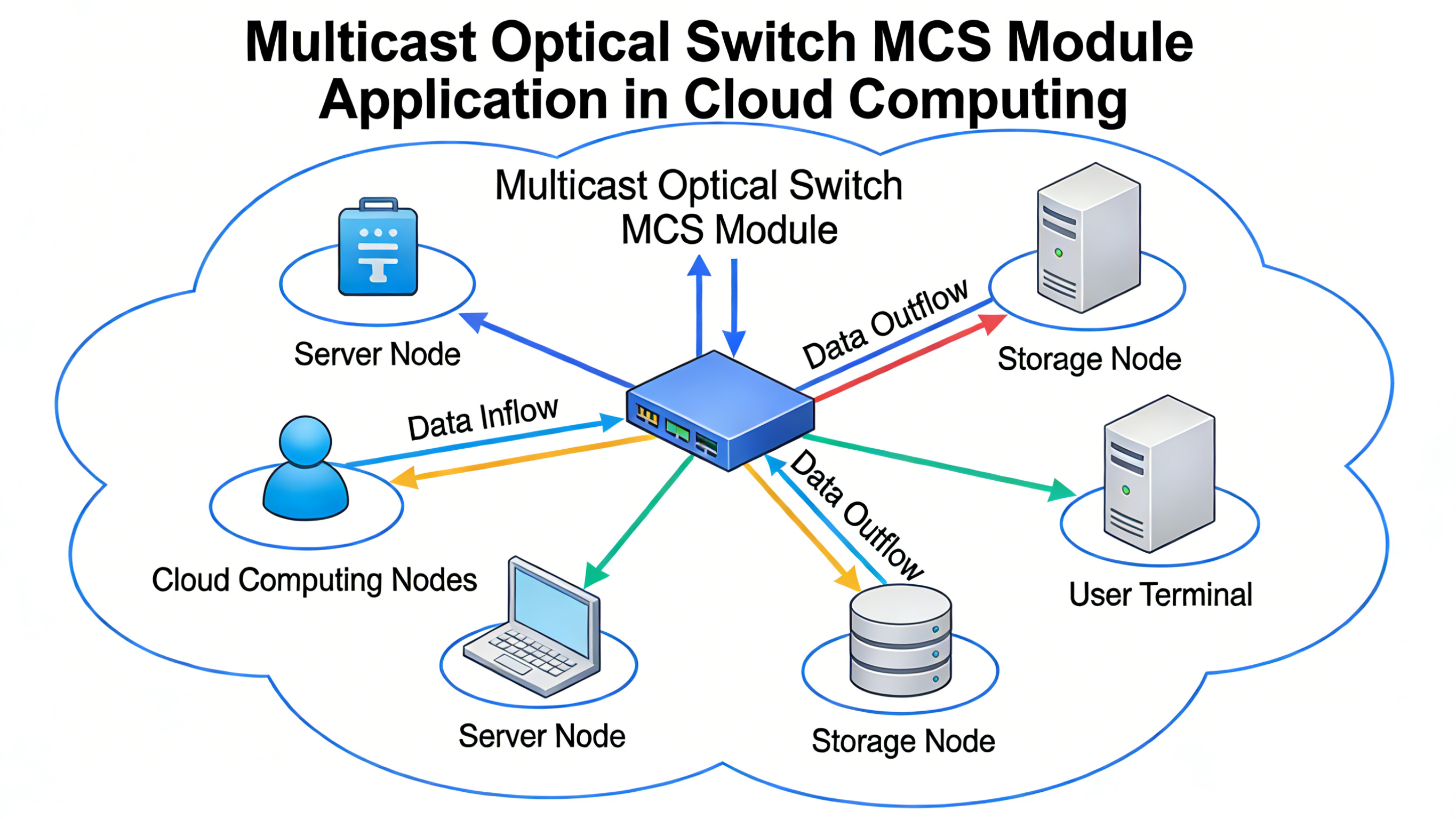
With its efficient optical switching technology, superior stability, flexible expandability, and adaptability to complex application scenarios, the Multicast Optical Switch MCS Module has become an essential part of modern optical network switching. As data traffic continues to grow, the MCS module will play a key role in more industries, driving continuous innovation and development in optical networks.
Address : 5F,Zhongshunyiquan Industry Park, Fuqian Road,Longhua District, Shenzhen, China
Address : 5F,Zhongshunyiquan Industry Park, Fuqian Road,Longhua District, Shenzhen, China
Tel : +86-755-23771707
Whatsapp : +86 13544277727
Email : sales@gezhi.net
Skype : 13544277727
Copyright Gezhi Photonics Co.,Ltd. All rights reserved.


