
The rapid growth of data communication in recent years has underscored the importance of robust and reliable transmission systems. Optical Line Protection (OLP) is a device designed specifically for ensuring the resilience of these network transmission lines. Its key functionality revolves around optical power monitoring and automatic switching to safeguard the data transmission process.
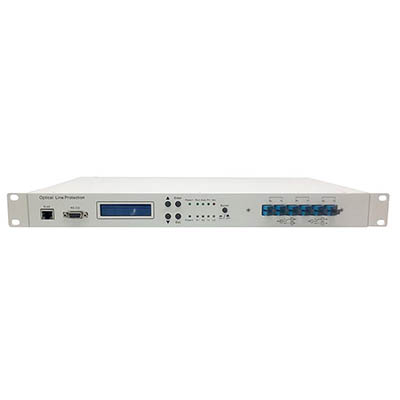
In the realm of optical communication networks, the OLP stands as a vigilant watchman. Its primary duty is to continually monitor the optical power of both the working and standby optical fibers. Should the optical power value of the working fiber fall below the set switching threshold, the OLP springs into action. It raises an alarm prompt and automatically switches to the standby fiber, thereby ensuring the protection of the optical transmission line.
Such an automatic switching mechanism significantly enhances the reliability of optical transmission systems, protecting them against potential network failures or disruptions.
Recognizing that different network setups may have varying requirements, Gezhi provides three types of line protection: 1:1 line protection, 1+1 line protection, and 1-1 line protection. This diversity enables OLP devices to cater to a wide range of control needs and application scenarios. Moreover, both wavelengths and connectors can be customized, further enhancing the adaptability of the OLP devices.
Gezhi's OLP devices come packed with several standout features designed to maximize their performance and efficiency:
1. Wide Wavelength Range: These devices can operate across a broad wavelength range of 1260 to 1650 nm, ensuring compatibility with various optical transmission systems.
2. Low Crosstalk: Crosstalk can interfere with the signal quality in optical communication. Gezhi's OLP devices are designed to minimize crosstalk, thereby preserving the integrity of the data transmission.
3. High Stability and Reliability: The OLP devices are engineered for superior stability and reliability, ensuring uninterrupted and efficient operation even in demanding network environments.
4. Modularized Design: The modular design of these devices enables easy integration and adaptability within various network configurations.

When choosing an OLP device, understanding its technical specifications is critical. Here is a rundown of the key technical parameters for Gezhi's 1:1, 1+1, and 1-1 line protection OLP devices:
Further breaking down the technical specifications, we have:
| Parameters | Unit | OLP-1:1 | OLP-1+1 | OLP-1-1 |
|---|---|---|---|---|
| Wavelength Range | nm | 1260 ~ 1650 | ||
| Test Wavelength | nm | 1310 / 1550 | ||
| Insertion Loss | dB | TX<1.2, RX<1.2 | TX<4, RX<1.2 | <1.2 |
Return LossdBSM ≥ 45
CrosstalkdBSM ≥ 50
PDLdB≤ 0.20
WDLdB≤ 0.30
PD dark currentnA<1
PD responsivitymA/W24 ~ 40
PD report accuracydB±0.5 (at -50 to 23 dBm)
Operating voltageV4.5 ~ 5.5
Operating currentmA80 ~ 120
Operating Temperature℃-5 ~ +60
Storage Temperature℃-30 ~ +80
Dimensionmm120×80×18
OLP devices are not restricted to a single application or industry. The versatility and critical functionality they offer make them an essential component across numerous sectors. Here are some key industries that extensively utilize OLP:
Telecommunication networks are heavily reliant on robust data transmission systems. These networks serve as the backbone for a plethora of services, including voice calls, data services, and streaming media. OLP devices play a critical role in ensuring the uninterrupted operation of these services by providing reliable protection for the optical transmission lines.
ISPs are another sector where OLP devices are widely used. Given that these providers are responsible for transmitting vast amounts of data to and from households and businesses, maintaining the integrity and reliability of their networks is paramount. OLP devices are integral in safeguarding these data highways, contributing to the smooth operation of internet services.
With the advent and rapid expansion of cloud technologies, OLP devices have found a significant application in cloud service networks. These networks need to handle enormous data traffic and cannot afford interruptions or delays. Here, the role of OLP devices becomes crucial in ensuring that data transmission lines are always protected and available.
Data centers, the powerhouses of the digital world, also extensively use OLP devices. These centers are tasked with storing, processing, and distributing large amounts of data. Therefore, the reliability and resilience of their transmission lines are of utmost importance. OLP devices provide a crucial layer of protection, helping to ensure that data centers can deliver their services efficiently and reliably.
Broadcasting networks that deliver media content such as television or radio broadcasts depend on efficient and continuous data transmission. Any interruption could result in loss of signal and compromise the user experience. OLP devices offer invaluable support in these networks by ensuring seamless data transmission and protection against potential disruptions.
Healthcare services today rely heavily on technology for patient records, diagnostics, telehealth services, and more. Fast and secure data transmission is crucial in this industry, and OLP devices play an important role in maintaining these high standards by offering line protection for optical transmission systems.
Financial services, including banking and trading platforms, deal with sensitive information that requires high-speed and secure data transmission. Even a brief interruption can have significant repercussions. The use of OLP devices in these systems ensures protection against such issues, contributing to a reliable and robust financial network.
Government institutions also rely on fast and secure data transmission for a multitude of services and communications. The role of OLP devices in protecting the integrity and continuity of these data streams is essential for effective governance and public service delivery.
The above are just a few of the many industries where Optical Line Protection devices are pivotal. As we continue to rely heavily on digital communication and data transmission, the need for such protective measures only increases, making OLP devices an indispensable element of modern networks.
The GEZHI OLP devices are not only highly efficient but also comply with international industry standards. The operating and storage temperatures, wavelength range, and other technical specifications adhere strictly to the standards set by recognized international bodies. This ensures that when you invest in a GEZHI OLP device, you're not only acquiring a high-performance tool, but you're also ensuring that your data transmission systems meet global quality and safety standards.
In our ever-evolving digital world, communication has become predominantly optical. The vast expansion of digital data and its subsequent transmission requires robust and reliable technology. Within this system, the Optical Line Protection (OLP) stands as a stalwart device, safeguarding against potential disruptions and ensuring a smooth and uninterrupted data flow.
OLP devices, like those offered by GEZHI, continuously monitor the optical power of the working and standby optical fibers. If the working fiber's optical power falls below a set switching threshold, the OLP device triggers an alarm and automatically switches to the standby fiber. This auto-switching capability is a major game-changer in maintaining data transmission system integrity, drastically minimizing the chance for data loss or service disruption.
The application of OLP devices extends to many industries, including broadcasting, healthcare, financial services, and government infrastructure.
Broadcasting networks rely on OLP devices for efficient and continuous data transmission. Any disruption could lead to signal loss and potentially compromise user experience. Thus, OLP devices ensure seamless data transmission and provide a protective shield against potential interruptions.
Modern healthcare services heavily rely on technology for patient records, diagnostics, and telehealth services. In these cases, fast and secure data transmission is crucial, and OLP devices play a significant role in maintaining these high standards.
Financial services, including banks and trading platforms, deal with sensitive information requiring high-speed and secure data transmission. Even a brief interruption could have significant repercussions. The use of OLP devices in these systems ensures protection against such issues.
Government institutions require fast and secure data transmission for various services and communications. OLP devices are essential for maintaining the integrity and continuity of these data streams.
GEZHI OLP devices comply with international industry standards. The operating and storage temperatures, wavelength range, and other technical specifications strictly adhere to globally recognized standards. This compliance assures users that by investing in a GEZHI OLP device, they are not only acquiring a high-performance tool but also ensuring that their data transmission systems meet global quality and safety standards.
When considering OLP devices, the technical specifications are an integral part of the decision-making process. GEZHI's OLPs bring superior technicality to the forefront, boasting impressive features and metrics that place them at the pinnacle of OLP technology.
| Parameter | Unit | OLP-1:1 | OLP-1+1 | OLP-1-1 |
|---|---|---|---|---|
| Wavelength Range | nm | 1260 ~ 1650 | - | |
| Test Wavelength | nm | 1310 / 1550 | - | |
| Insertion Loss | dB | TX<1.2, RX<1.2 | TX<4, RX<1.2 | <1.2 |
The broad wavelength range, low insertion loss, and high return loss are among the key features that give GEZHI OLP devices an edge over their competitors. Their exceptional crosstalk, wavelength-dependent loss (WDL), and polarization-dependent loss (PDL) metrics contribute to their superior performance and reliable operation. Furthermore, the dark current and responsivity of the photo-diode (PD) in these devices ensure precise and accurate monitoring of the optical power in the fiber.
GEZHI offers three types of line protection: 1:1, 1+1, and 1-1. Your choice will depend on the specific requirements of your system. The 1:1 line protection is the most straightforward type, providing a simple fail-safe mechanism. The 1+1 option offers an additional level of redundancy, with two lines operating simultaneously and ready to take over should the other fail. Lastly, the 1-1 protection type provides for bi-directional transmission, with both lines capable of sending and receiving signals.
Apologies for the confusion. It seems there was a duplication of content in the previous response. Let's continue with the article:
GEZHI Photonics offers high-quality Optical Line Protection (OLP) devices that are designed to safeguard network transmission lines and ensure uninterrupted optical communication. These OLP devices are equipped with advanced features that enable optical power monitoring and automatic switching, providing a reliable and efficient solution for maintaining network integrity.
Wide Wavelength Range: GEZHI's OLP devices are compatible with a wide range of wavelengths, spanning from 1260 nm to 1650 nm, making them suitable for various fiber optic communication applications.
Low Crosstalk: The OLP devices exhibit low crosstalk, ensuring that signals transmitted through one fiber channel do not interfere with adjacent channels, thereby enhancing signal clarity and integrity.
High Stability, High Reliability: GEZHI's OLP devices are built to withstand the rigors of demanding environments, providing consistent performance and reliable protection for critical communication networks.
Modularized Design: The OLP devices feature a modularized design, allowing for easy installation and maintenance, and enabling scalability to accommodate future network expansion.
GEZHI's Optical Line Protection devices find versatile applications across a wide range of industries, ensuring seamless and uninterrupted fiber optic communication. Some of the key industry applications include:
Telecommunication networks rely heavily on fiber optics for high-speed data transmission. GEZHI's OLP devices are deployed in telecom networks to safeguard critical transmission lines, minimizing downtime and enhancing service reliability for end-users.
In the broadcast and media industry, where real-time transmission of high-definition video and audio is paramount, GEZHI's OLP devices play a crucial role in providing fail-safe protection for the transmission links, preventing any disruption to broadcasting services.
For aerospace and defense applications, where secure and reliable communication is vital, GEZHI's OLP devices ensure continuous connectivity even in harsh environments, ensuring the success of critical missions and operations.
In research institutions and educational establishments, where data-intensive experiments and collaborative projects are conducted, GEZHI's OLP devices safeguard valuable data during transmission, minimizing data loss and maintaining data integrity.
GEZHI Photonics designs and manufactures Optical Line Protection devices in adherence to international standards to ensure seamless integration and compatibility with a wide range of optical communication equipment. The OLP devices are engineered to operate effectively within a temperature range of -5℃ to +60℃ for operating conditions and -30℃ to +80℃ for storage conditions, complying with industry standards for reliable performance under varying environmental conditions.
GEZHI Photonics' Optical Line Protection (OLP) devices offer a robust and reliable solution for safeguarding network transmission lines in various industries. With their wide wavelength range, low crosstalk, and high stability, these OLP devices are designed to meet the demands of modern fiber optic communication networks. Whether in telecommunications, broadcast, aerospace, or research, GEZHI's OLP devices play a vital role in ensuring seamless and uninterrupted optical communication.
Address : 5F,Zhongshunyiquan Industry Park, Fuqian Road,Longhua District, Shenzhen, China
Address : 5F,Zhongshunyiquan Industry Park, Fuqian Road,Longhua District, Shenzhen, China
Tel : +86-755-23771707
Whatsapp : +86 13544277727
Email : sales@gezhi.net
Skype : 13544277727
Copyright Gezhi Photonics Co.,Ltd. All rights reserved.


