
When migrating from a 1G to a 10G network, the issue of SFP to SFP+ compatibility is often encountered. How do these two types of transceivers interact? Can 1G SFP optics work with 10Gb SFP+ ports on a 10Gb switch, or vice versa? This comprehensive guide reveals the intricacies of SFP and SFP+ compatibility and provides useful solutions for network switch users.

Can 1G SFP Optics Run at 10G SFP+ Port?
Can 10G SFP+ Optics Run at 1G SFP Port?
Can SFP+ Optics Auto-negotiate Down to 1G with Gigabit Switch?
What Is SFP Port on Gigabit Switch?
What Is SFP+ Port on 10Gb Switch?
Conclusion
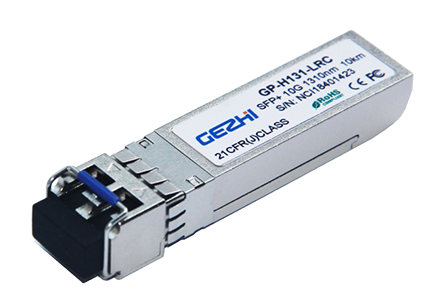
When discussing whether 1G SFP modules can operate in 10G SFP+ ports, the answer is not as straightforward as it may seem. Compatibility heavily relies on the specific model of the switch.
Generally speaking, SFP+ slots can accept SFP modules. However, they usually do so at a reduced speed of 1Gb. In some instances, the SFP+ port may lock the speed at 1Gb until you reboot the switch or implement specific commands. It's important to note that SFP+ ports typically don't support speeds below 1G. Therefore, it is not possible to use a 100BASE SFP module in an SFP+ port.
To avoid confusion and ensure a smooth network operation, it's recommended that you consult the vendor or the detailed documentation of the switch to confirm whether your 10Gb switch port supports a dual rate before plugging in an SFP transceiver into the SFP+ port.
Next, can 10G SFP+ transceivers function at 1G SFP ports? The answer depends on several factors.
In theory, it is possible to downscale the 10G SFP+ transceiver on the switch. However, this practice is generally discouraged for a variety of reasons, particularly from an economic standpoint. If you have a 1G switch and a 10G switch and you connect them using two 10G fiber optic transceiver modules, you will only achieve 1G network connectivity. Since 10G ports can take 1G modules and yield the same result, it would be more economical to use 1G modules instead of 10G modules.
Can a 10G SFP+ module in one switch communicate with a 1G module in another and negotiate? The answer depends on the type of wiring and transceivers involved.
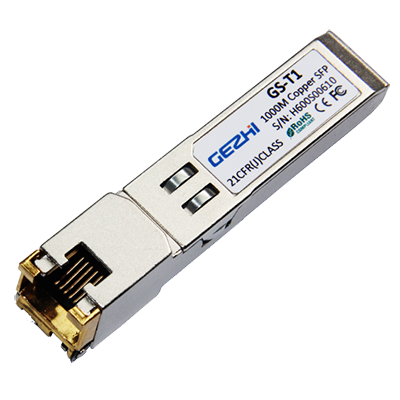
For Ethernet over copper wiring, auto-negotiation is a supported feature. This means that only the BASE-T SFP transceivers, which are copper SFP modules that support 10/100/1000 auto-sensing, have the auto-negotiation capability.
However, for fiber-based transceivers, such as fiber SFP and SFP+ optics, auto-negotiation is not a supported feature. Auto-negotiation only works when it's running on both sides of the link. The two devices connected by the link will decide the best speed and duplex mode together. Most SFP and SFP+ transceivers operate at their rated speed as they are manufactured. Thus, a 10Gb SFP+ optic on a 10Gb switch cannot auto-negotiate down to 1Gb if the other end is a gigabit switch.
For instance, if a 10Gb SFP+ module is plugged into a 10Gb switch port, it will only operate at 10Gb. In this scenario, if you connect it to a gigabit switch port, it will not work. However, if you insert a 1Gb SFP module into the 10Gb SFP+ port, the 10Gb switch will operate at 1Gb, allowing you to connect it to a Gigabit switch.
As of 2021, 1/10G dual-rate SFP+ transceivers have been designed for use in 1-Gigabit and 10-Gigabit Ethernet links over single-mode fiber (SMF) or multi-mode fiber (MMF). It is now possible to connect 1/10G dual-rate SFP+ transceivers on a 10G switch with a 1G transceiver plugged into a 1G switch.
An SFP port is a compact, hot-pluggable network interface on a network switch. The Small Form-factor Pluggable (SFP) port enables a gigabit switch to achieve fiber uplink over longer distances or short-range copper uplinks by inserting the corresponding SFP module (fiber SFP or copper SFP).
Typical speeds for Ethernet SFPs are 1 Gbit/s, while Fiber Channel SFP modules can reach up to 4 Gbit/s. The primary purpose of an SFP port is to connect network devices, such as switches and routers, over a network.
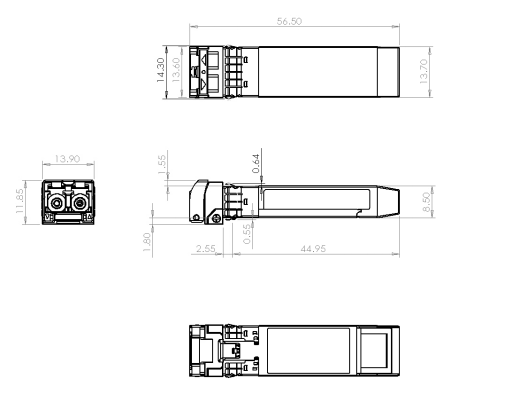
SFP+ and SFP ports appear virtually identical in size and form. SFP+ supports higher speeds, with 8 Gbit/s Fibre Channel, 10 Gigabit Ethernet, and Optical Transport Network standard OTU2 being standard. The SFP+ format is popular among network component vendors. The key difference between the two is that SFP+ is an updated version of SFP that supports speeds up to 10 Gbps.
10Gb switches typically come in two main types: 10G fiber switches and 10GBASE-T switches. Both these types of switches may have higher-bandwidth uplink ports (25G/40G/100G) to connect to other high-speed switches in a network topology.
Will 10Gb SFP+ run at 1Gb? The answer depends. You can down-rate a 10G SFP+ transceiver on a switch, but this practice is generally discouraged. From an economic standpoint, consider that you have one 1G switch and one 10G switch. If you connect them with two 10G fiber optic transceiver modules, you will only achieve a 1G network connectivity. Given that 10G ports can take 1G modules and yield the same result, it is more cost-effective to replace 10G modules with 1G ones.
Can a 10G SFP+ transceiver module plugged into one switch connect to a 1G transceiver in another switch and auto-negotiate? The answer is, it depends. For Ethernet over copper wiring, auto-negotiation is supported, meaning only BASE-T SFP transceivers (which support 10/100/1000 auto-sensing) can auto-negotiate.
However, fiber-based transceivers, such as fiber SFP and SFP+ optics, do not support auto-negotiation. Auto-negotiation only works when it’s enabled on both ends of the link. Both devices in the link determine the best speed and duplex mode. Since most SFP and SFP+ transceivers operate at their rated speed, a 10Gb SFP+ optic on a 10Gb switch cannot auto-negotiate down to 1Gb if the other end is a gigabit switch.
For example, a 10Gb SFP+ module plugged into a 10Gb switch port will only operate at 10Gb. If you link this to a gigabit switch port, it will not work. However, if you plug a 1Gb SFP module into a 10Gb SFP+ port, the 10Gb switch will operate at 1Gb. This setup can then be linked to the gigabit switch.
In 2021, 1/10G dual-rate SFP+ transceivers were designed for use in both 1-Gigabit and 10-Gigabit Ethernet links over single-mode fiber (SMF) or multi-mode fiber (MMF). Thus, it became viable to connect a 1/10G dual-rate SFP+ transceiver on a 10G switch with a 1G transceiver plugged into a 1G switch. These innovative modules significantly simplified network design and operation, giving network engineers more flexibility and options when planning and implementing their networks.
There are several considerations when dealing with SFP to SFP+ compatibility. When planning your network, you should ensure that the connectors on both ends are the same and that there are no manufacturer compatibility issues. Consulting your switch vendor is crucial to ensure a smooth network transmission. Here at Gezhi Photonics, we are always ready to assist you with any queries or concerns you might have.
When addressing the issue of SFP to SFP+ compatibility, the most straightforward answer is: it depends. The primary factor that determines compatibility is the specific model of your network switch. While some 10G SFP+ ports can accept 1G SFP modules, others might not. Consulting with your switch vendor is essential to ensure smooth network transmission.
It's also worth noting that advancements in technology have led to the development of dual-rate SFP+ transceivers. These modules can operate at both 1G and 10G, providing more flexibility in network design and compatibility.
At Gezhi Photonics, we have a range of SFP and SFP+ modules that can cater to your specific network needs. We pride ourselves on our technical expertise and customer service, and we're always ready to help you navigate the complex world of network design.
Most SFP+ ports can accept SFP optics, but at a reduced speed of 1G. However, this depends greatly on the specific model of the switch. It's best to consult your switch vendor to ensure compatibility.
Typically, you would need to downrate the 10G SFP+ transceiver on the switch. However, this practice is not generally encouraged. If you have a 1G switch and a 10G switch, using 10G modules will result in a 1G network connection. Therefore, it's usually more cost-effective to use 1G modules.
Auto-negotiation is not typically supported by fiber-based transceivers, such as SFP and SFP+ optics. Most SFP and SFP+ transceivers only operate at their rated speed. Therefore, a 10Gb SFP+ optic on a 10Gb switch cannot auto-negotiate down to 1Gb if the other end is a gigabit switch.
Understanding SFP to SFP+ compatibility is essential when upgrading your network. Yet, there are other factors to consider as well. Ensure to review the total bandwidth required, the distance that the signal will need to travel, and the type of media (copper or fiber) that will be used. Considerations like these will guide you to select the appropriate transceiver module for your network. Remember, at Gezhi Photonics, our expert team is always available to guide you through the process.
As technology continues to evolve, so too will the capabilities and compatibilities of SFP and SFP+ modules. To stay ahead, it is crucial to keep up-to-date with the latest advancements in this field. Follow us at Gezhi Photonics to stay informed about the latest trends in network technology and ensure your network continues to operate at peak performance.
Whether you're a small business owner looking to expand your network or a seasoned IT professional navigating the intricacies of large-scale data centers, knowing your SFP from your SFP+ will go a long way. Remember, compatibility is key, and staying informed will ensure your network is always ready for the challenges of tomorrow.
Address : 5F,Zhongshunyiquan Industry Park, Fuqian Road,Longhua District, Shenzhen, China
Address : 5F,Zhongshunyiquan Industry Park, Fuqian Road,Longhua District, Shenzhen, China
Tel : +86-755-23771707
Whatsapp : +86 13544277727
Email : sales@gezhi.net
Skype : 13544277727
Copyright Gezhi Photonics Co.,Ltd. All rights reserved.


