
When it comes to evaluating the performance of an optical transceiver, two key factors come to the fore: Output power (TX Power) and Receiver Sensitivity (RX Sensitivity). An understanding of these concepts is pivotal to establishing an effective and efficient optical network. This comprehensive guide, built upon decades of expert knowledge, will dissect the intricacies of TX Power and RX Sensitivity, providing you with a granular understanding of these crucial elements of optical transceivers.
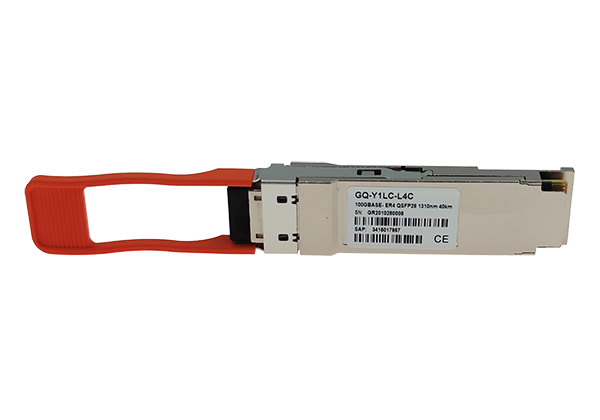
100G QSFP28 Optical Transceiver
Simply put, the output or transmit power (TX Power) is the strength of the signal that's leaving the device. This should fall within a specific range determined by the capabilities of the transmitter. Exceeding or falling short of this range can lead to inefficient communication, signal loss, or potential damage to the equipment.
The receiver sensitivity (RX Sensitivity), on the other hand, is the minimum level of the incoming signal that the receiver can effectively interpret. This level must fall within the receiver's power range. If the incoming signal is too weak, the receiver will not be able to decode it, leading to data loss. Conversely, if the incoming signal is too strong, it might overload the receiver, also resulting in data loss.
The transmit power and receive sensitivity are often measured in dBm, which stands for decibel milliwatts. It's a logarithmic unit that measures power in relation to 1 milliwatt (mW). Because dBm is a logarithmic scale, a small change in dBm value corresponds to a significant change in power. For instance, a 3 dB increase represents a doubling of the power level. Some vendors use milliwatt (mW) or microwatt (µW) instead of dBm. To maintain consistency, these values should be converted to dBm before any calculations are performed.
The optical power budget is a crucial element in the design of an optical link. Essentially, it's the maximum allowable loss the link can tolerate while still maintaining acceptable performance. This value is determined by subtracting the receiver's minimum detectable power (RX Sensitivity) from the transmitter's output power (TX Power).
Let's look at the Gezhi 10GBASE-SR SFP transceiver as an example to illustrate these concepts. This transceiver has a transmit power range of -7.3 dBm to 1 dBm and a receiver power range of less than -11.1 dBm.
| TX Power (dBm) | RX Sensitivity (dBm) | Power Budget (dBm) | |
|---|---|---|---|
| Gezhi 10GBASE-SR SFP | -7.3 to 1 | <-11.1 | 3.8 |
If you notice an RX Sensitivity around -12 dBm or lower, it often indicates a problem in the cable infrastructure, such as a bad splice, dirty connector, poorly seated jumper, and so forth. These issues lead to higher signal loss, which is detrimental to the overall performance of your network.
From the TX Power and RX Sensitivity, we can calculate the maximum allowable loss or power budget of the Gezhi 10GBASE-SR SFP transceiver. Using the given values, the power budget is calculated as follows: Power Budget (dBm) = TX Power (-7.3 dBm) - RX Sensitivity (-11.1 dBm) = 3.8 dBm. Remember that a higher optical power budget indicates that the fiber transceiver can support longer distances.
The 10GBASE-SR SFP transceiver, with its power budget of 3.8 dBm, can support a distance of 300 m over an OM3 multimode fiber patch cable. On the other hand, the 10GBASE-LR SFP transceiver, which has a different power budget, can support a distance of up to 10 km over a single-mode fiber patch cable. Thus, the selection of the right optical transceiver for your network should consider the intended distance and corresponding power budget.
Different types of optical fibers have varying capabilities and specifications. Typically, we classify optical fibers into two types: single-mode fibers (SMF) and multimode fibers (MMF). These fiber types significantly impact the performance of the optical transceivers.
Single-mode fibers allow only one mode of light to propagate, thereby reducing the modal dispersion that affects signal quality in multimode fibers. As a result, single-mode fibers can support longer transmission distances, making them suitable for long-haul applications. For example, a 10GBASE-LR SFP transceiver can support a distance of up to 10 km over a single-mode fiber patch cable.
Multimode fibers, on the other hand, allow multiple light modes to propagate at once. This feature leads to a higher rate of modal dispersion, which limits the maximum transmission distance. However, multimode fibers have higher coupling efficiency and can handle higher power, which makes them suitable for shorter, high-bandwidth applications. For instance, a 10GBASE-SR SFP transceiver can support a distance of up to 300 m over an OM3 multimode fiber patch cable.
When the RX sensitivity of an optical transceiver is found to be around -12 dBm or lower, it generally signals a problem with the cable infrastructure. The issue could be a result of a bad splice, dirty connector, poorly seated jumper, etc., all of which cause higher signal loss. Here are a few ways to diagnose and resolve these issues:
Regular inspection and cleaning of the fiber connectors can prevent many common issues. Dirty connectors are a significant cause of optical loss and can even damage the fiber end-face. Always use professional cleaning tools and follow the recommended cleaning procedures to keep the connectors in optimal condition.
Proper fiber splicing and connector seating are crucial for maintaining the integrity of the optical signal. Make sure to use high-quality splicing tools and follow industry-standard practices. If a poor splice or connector seating is suspected, have a professional technician re-do the work.
An Optical Time-Domain Reflectometer (OTDR) is a valuable tool for diagnosing issues in the fiber cable plant. It can measure the exact location and level of signal loss, helping you identify issues such as fiber breaks, bends, and poor-quality splices.
Understanding the critical parameters of TX Power and RX Sensitivity is essential in building and maintaining an efficient optical network. By using this knowledge and appropriate tools, you can select the right transceivers, design optimal links, and quickly troubleshoot any issues that arise. Remember, Gezhi is your partner in all your optical networking needs, offering a wide range of high-quality, reliable optical transceivers.
Address : 5F,Zhongshunyiquan Industry Park, Fuqian Road,Longhua District, Shenzhen, China
Address : 5F,Zhongshunyiquan Industry Park, Fuqian Road,Longhua District, Shenzhen, China
Tel : +86-755-23771707
Whatsapp : +86 13544277727
Email : sales@gezhi.net
Skype : 13544277727
Copyright Gezhi Photonics Co.,Ltd. All rights reserved.


