
With the advent of 5G, the demand for more efficient communication networks has become a critical concern for telecom operators worldwide. One technology that shows great promise in addressing this issue is the Packet Optical Transport Network (POTN).
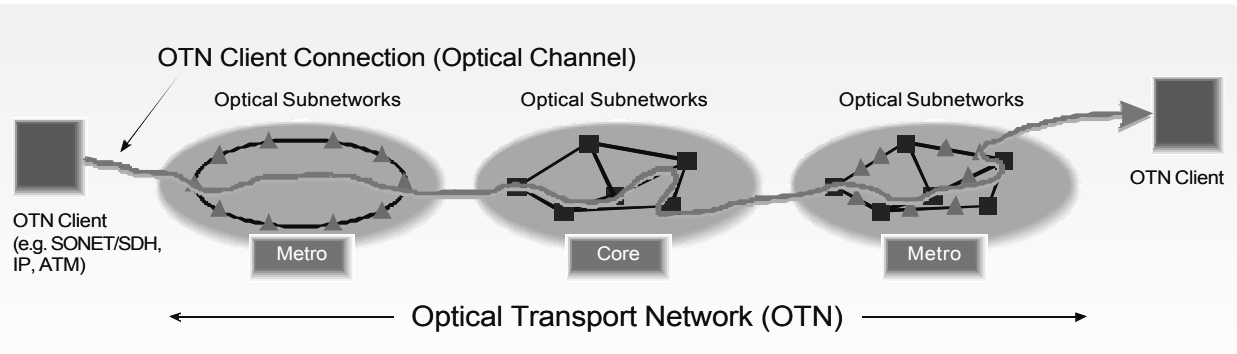
The Packet Optical Transport Network (POTN) is a revolutionary technology that fuses the capabilities of Packet Transport Network (PTN) and Optical Transport Network (OTN). It forms a robust and efficient transport layer situated between IP services and the underlying optical transmission medium, designed to manage the burstiness and statistical multiplexing of packet traffic.
To comprehend the depth of POTN's capabilities, it is essential to understand the underlying technologies that comprise it - PTN and OTN.
PTN is an optical transport technology that introduces a layer between IP services and the underlying optical transmission medium to handle the burstiness and statistical recovery of packet traffic. This arrangement brings a high level of efficiency and adaptability to packet-based communication networks.
OTN, on the other hand, focuses on the transmission, multiplexing, routing, and monitoring of service signals in the optical domain. It is designed to offer guaranteed performance indicators and robust survivability.
Service providers and mission-critical optical network operators are leveraging Packet Optical Networking Platforms (PONPs) to offer unparalleled TDM-equivalent Ethernet services and infrastructure for critical services, wholesale and residential broadband, mobile backhaul, data center interconnect, and enterprise services delivery.
Being based on a unified packet switching platform, POTN can support both Layer 2 (Ethernet/MPLS) and Layer 1 (OTN/SDH) switching. This enables the flexible addition and reduction of POTN functions across different application and network deployment scenarios.
POTN offers an array of benefits that make it an attractive choice for organizations. Here are some key reasons why businesses opt for POTN:
POTN merges the advantages of packet switching and optical transport technologies, providing a converged network infrastructure. It facilitates the efficient transport of both traditional circuit-switched traffic and packet-based data over the same network.
POTN displays high flexibility in terms of service types. It can accommodate a broad spectrum of services, including voice, data, and video, making it apt for a variety of applications and customer demands.
By incorporating packet switching capabilities, POTN efficiently utilizes network bandwidth by dynamically allocating resources based on demand. This approach optimizes network utilization and ensures efficient use of available resources.
POTN boasts high scalability, empowering network operators to readily expand their network capacity as traffic demands surge. It provides flexibility for incorporating new services and accommodating future growth without substantial disruptions.
By harnessing packet switching technology and optical transport, POTN delivers cost-effective solutions for network operators. It aids in reducing operational costs, simplifying network management, and allowing for the consolidation of multiple services onto a single network infrastructure.
Adopting Packet Optical Transport Network (POTN) technology brings numerous benefits for organizations. By embracing POTN, organizations can unlock the true potential of their networks, streamline their operations, and push forward in an era of rapid digital connectivity.
Having an in-depth understanding of the workings of POTN is critical in appreciating the benefits and potential it offers in network communications. Let's delve deeper into its components and their roles:
In a POTN setup, PTN establishes a layer between the IP services and the underlying optical transmission medium. This arrangement effectively manages the burstiness and statistical recovery of packet traffic, ensuring optimal performance and efficiency in data transportation.
PTN incorporates packet-switching technology, which utilizes dynamic resource allocation based on the current demand. This dynamic resource allocation allows the network to handle varying levels of data traffic efficiently, optimizing bandwidth utilization and minimizing latency.
OTN plays an essential part in POTN, being responsible for the transmission, multiplexing, routing, and monitoring of service signals within the optical domain. By implementing advanced error correction techniques and comprehensive network management, OTN ensures reliable, high-speed data transmission across the network.
OTN brings the benefit of guaranteed performance indicators and robust survivability to the table, contributing significantly to POTN's ability to offer reliable and high-quality network services.
With its fusion of packet transport and optical transport technologies, POTN is redefining network communications. Let's explore how POTN's unique features are bringing about this transformation:
With POTN, traditional circuit-switched traffic and packet-based data can efficiently coexist on the same network. This converged network infrastructure helps in simplifying network management and reducing operational costs, making it an attractive proposition for network operators.
POTN's ability to support a broad spectrum of services, including voice, data, and video, allows it to meet a variety of customer demands. This flexibility is particularly beneficial in today's world, where the need for diverse communication services is ever-increasing.
Thanks to its packet-switching capabilities, POTN is capable of dynamic resource allocation, which leads to efficient utilization of network bandwidth. This ensures that the network can handle high levels of data traffic without any performance degradation, contributing to superior user experience.
POTN's high scalability makes it easy for network operators to expand their network capacity in response to increasing traffic demands. This ability to grow without significant disruption is a critical factor in today's fast-paced digital environment, where data traffic levels are continuously rising.
By leveraging packet-switching technology and optical transport, POTN delivers a cost-effective solution for network operators. It allows for the consolidation of multiple services onto a single network infrastructure, which can lead to substantial savings in operational costs.
As we move towards a more connected world, the demand for efficient, reliable, and scalable network communications is set to increase. POTN, with its unique combination of packet transport and optical transport technologies, is well-positioned to meet these demands and play a critical role in the future of network communications.
One of the key strengths of POTN technology is its versatility and adaptability, allowing it to be utilized across multiple sectors. Each of these sectors has unique demands and challenges, and the comprehensive solutions provided by POTN can significantly enhance their operations. Here, we delve into some of these applications and how they are reaping benefits from POTN:
Service providers, such as telecommunications companies and internet service providers, are under constant pressure to meet the growing demands for high-speed, reliable data transmission. POTN, with its combination of PTN and OTN, provides an optimal solution for these providers, enabling them to offer a wide range of services, including Ethernet services and infrastructure for critical services, wholesale and residential broadband, mobile backhaul, data center interconnect, and enterprise services delivery.
For mission critical optical network operators, network reliability, performance, and scalability are of utmost importance. POTN offers a robust and scalable solution that can handle large volumes of data traffic while ensuring consistent high-quality service. The implementation of POTN in these environments helps ensure that critical information is always accessible and transmitted efficiently, thereby minimizing downtime and ensuring seamless operations.
In the era of big data and cloud computing, data centers play a crucial role in storing and processing vast amounts of information. POTN's capability to handle high-speed data transmission and its scalability make it an ideal choice for data center interconnects. By implementing POTN, data centers can ensure efficient and reliable data transfer between facilities, enhancing their performance and the services they offer to their clients.
When deciding on a network technology, it's vital to compare POTN with other available technologies to understand its advantages and potential challenges. This comparison will help stakeholders make informed decisions about their network infrastructure:
Traditional Ethernet networks are widely used for their simplicity and cost-effectiveness. However, they often lack the scalability and flexibility needed to handle modern network demands. POTN, on the other hand, combines the advantages of packet transport with the capabilities of optical transport, providing a network solution that is scalable, flexible, and capable of supporting various service types. Moreover, POTN's convergence of traditional circuit-switched traffic and packet-based data within a single network also reduces the complexity and cost of managing multiple networks.
While SDH/SONET networks have been the standard for high-speed synchronous data transfer, they can struggle with packet-based data traffic. POTN, with its support for both L1 switching (OTN/SDH) and L2 switching (Ethernet/MPLS), can handle both circuit-switched and packet-based traffic efficiently, making it a more versatile and future-proof solution.
At Gezhi Photonics, we understand the intricate demands of network communication and are dedicated to providing robust, high-performing POTN solutions tailored to meet your specific needs. Our experience and expertise in the field ensure that we can help you navigate the complexities of network communication, providing you with a solution that enhances your operations and supports your growth.
POTN is undoubtedly a transformative technology in network communications, combining the benefits of packet transport and optical transport to provide a versatile, scalable, and efficient solution for modern network demands. As we continue to embrace digital connectivity, organizations that leverage POTN will be well-positioned to meet the increasing demands for high-speed, reliable, and diverse network services.
Address : 5F,Zhongshunyiquan Industry Park, Fuqian Road,Longhua District, Shenzhen, China
Address : 5F,Zhongshunyiquan Industry Park, Fuqian Road,Longhua District, Shenzhen, China
Tel : +86-755-23771707
Whatsapp : +86 13544277727
Email : sales@gezhi.net
Skype : 13544277727
Copyright Gezhi Photonics Co.,Ltd. All rights reserved.


