
With the exponential surge in data usage globally, data centers face continuous pressure to evolve, offering more efficient, scalable, and faster solutions. One such innovative solution is the Optical Switch Technology, leveraging light for data transmission. Offering a host of benefits such as high speed, lower latency, reduced power consumption, and scalability, optical switch technology is set to reshape the future of data centers. This comprehensive guide delves into the details of optical switch technology, including its key features, benefits, types, implementation, and the associated challenges.
The modern digital landscape is characterized by a rapid increase in data demands, putting a tremendous burden on data center networks to provide efficient data transmission. This section discusses the various features and advantages of optical switch technology.
Optical switch technology allows for data transmission at ultra-high speeds, reaching multiple terabits per second. The acceleration in data transmission rates enhances the overall data center performance and opens avenues for further innovation and application development.
Optical switches use less power than electrical switches, providing significant energy savings and reducing the environmental impact, making data centers more sustainable.
Optical switch technologies facilitate efficient scalability by transmitting multiple data signals over a single optical fiber, thereby increasing the capacity of data center networks.
Optical switch technology reduces latency, leading to faster response times and enhancing the performance of various applications, including real-time data processing, cloud computing, and content delivery networks.
Since optical switching uses fiber optics, it is less susceptible to electromagnetic interference and signal degradation, ensuring high-quality data transmission across the network.
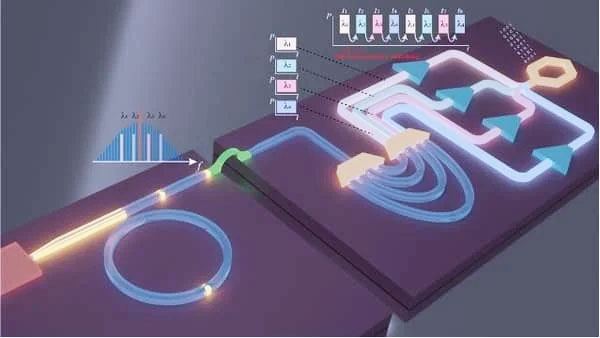
This section highlights real-world applications of optical switch technology, demonstrating its significant role in modern data center networking.
As one of the largest technology companies globally, Google's Jupiter network showcases the potential of optical switch technology, delivering high-performance networking by using a blend of optical and electrical components.
Private DWDM technology, used for optical data center interconnects, transmits multiple data signals over a single optical fiber, thereby increasing network capacity and improving overall performance.

Despite its benefits, implementing optical switch technology can pose challenges. This section discusses these hurdles and ways to mitigate them.
Seamless integration with current infrastructure is crucial. Data center managers need to assess their infrastructure and design an effective migration plan for a smooth transition to optical switching.
The installation of new hardware, software, and optical components can be complex and costly. However, the long-term advantages such as improved performance, energy efficiency, and scalability may justify this investment.
To conclude, optical switch technology plays a vital role in the future evolution of data centers. Its potential to offer high-speed data transmission, scalability, and reduced power consumption is making it an increasingly important element in the data center industry. Despite some implementation challenges, the long-term benefits are undeniable, making it a crucial technology to understand and leverage in this data-driven era.
Optical switches are the crux of data centers' optical networking, and they come in various types, each with their specific merits and applications. The most common types of optical switches include:
Optical Circuit Switching (OCS) is a type of optical switch that creates a dedicated path for data transmission between specific points in the network. OCS provides a consistent and predictable performance, making it ideal for applications requiring high bandwidth and low latency. Moreover, OCS ensures efficient utilization of network resources by allowing multiple data streams to be transmitted simultaneously without any interference.
Optical Packet Switching (OPS), another type of optical switch, enables data packets to be transmitted using optical signals and switched between different network paths. This approach provides greater flexibility and adaptability compared to OCS, as it can route data based on network conditions and demands. OPS is especially suitable for handling unpredictable and sporadic traffic patterns such as those in cloud computing environments.
A hybrid optical switch combines the advantages of both optical circuits and packet switching to create a more efficient and versatile network. This architecture can allocate resources based on network demands, offering optimal performance and flexibility. Hybrid optical switch architectures represent the future of data center networking, as they can adapt to the ever-changing requirements of modern applications and workloads.

Transitioning from traditional electrical switches to optical switches in a data center requires significant planning and resources. Here, we will explore various examples of how optical switch technology is being implemented in real-world scenarios.
Google's Jupiter network, for instance, employs optical switch technology with custom-built hardware and software to deliver high-performance networking. This network leverages both optical and electrical components for efficient, low-latency communication between data center facilities. The adoption of optical switch technology by one of the largest technology companies globally underscores the potential of this technology in revolutionizing data center networking.
Private Dense Wavelength Division Multiplexing (DWDM) technology, used for optical data center interconnects, is another example of optical switch technology implementation. DWDM enables multiple data signals to be transmitted over a single optical fiber, significantly boosting the capacity of data center networks. This technology allows for efficient network scaling, reduced latency, and improved overall performance.
All-optical switching is an innovative approach that uses advanced optical components and signals to transmit data, eliminating the need for electrical signal conversions. This method paves the way for faster and more efficient data transmission, reduces power consumption, and improves network scalability - all of which are vital for future-ready data centers.
While optical switch technology offers substantial advantages, it also presents some significant challenges. These challenges must be carefully considered and addressed to successfully implement this technology in a data center environment.
One of the main challenges is integrating optical switch technology with existing data center infrastructure. It's essential for data center managers to thoroughly assess their current infrastructure and design a careful migration plan. This plan should ensure a smooth transition to optical switching without compromising network performance or uptime.
Deploying optical switch technology can be complex and expensive, as it requires the installation of new hardware, software, and optical components. Data center operators must weigh the benefits of optical switching against the costs and resources needed for its implementation. However, the long-term advantages of improved performance, energy efficiency, and scalability could potentially outweigh the initial investment.
As optical switch technology continues to evolve, staying up-to-date with the latest trends and innovations is crucial. These advancements will enhance the capabilities of optical switches, allowing data centers to handle even more demanding workloads and applications. Therefore, it's critical for data center operators to stay informed and prepared to leverage new technologies as they emerge.

While optical switches are starting to take center stage in high-performance computing and data center applications, it's important to understand how they compare to their traditional electrical counterparts. Here, we examine the key differences between the two technologies, as well as their unique advantages and drawbacks.
| Parameters | Electrical Switches | Optical Switches |
|---|---|---|
| Speed | Electrical switches typically operate at a slower speed compared to optical switches, limiting their ability to handle high-volume data transmission. | Optical switches are capable of transmitting data at extremely high speeds, reaching up to terabits per second, making them ideal for high-volume data transmission. |
| Energy Efficiency | These switches consume more power due to the electrical signal conversions involved in data transmission, contributing to higher operational costs and increased carbon footprint. | Optical switches consume significantly less power, offering potential cost savings and a reduced carbon footprint. |
| Latency | Electrical switches can introduce latency due to the time required for signal conversions and processing. | Optical switches can help reduce latency, enabling faster response times, which is critical for real-time data processing, cloud computing, and content delivery networks. |
| Interference | Electrical switches are susceptible to electromagnetic interference, which can affect data integrity and lead to transmission errors. | As optical switches use light for data transmission, they are less susceptible to electromagnetic interference, ensuring more reliable and high-quality data transmission. |
| Scalability | Scaling with electrical switches often requires significant hardware changes and can present challenges in terms of space, power, and cooling requirements. | Optical switches, especially with technologies like wavelength division multiplexing, can easily scale to accommodate increasing data demands without substantial hardware changes. |
The advent of optical switch technology signals a significant shift in the way data centers handle network traffic. The future of data center networking is likely to be increasingly dominated by this technology, given the numerous advantages it offers in terms of speed, power efficiency, latency reduction, and scalability. Here are some ways we anticipate optical switch technology shaping the future of data centers:
As optical technology continues to evolve, we can expect data transmission speeds to increase even further. This advancement is crucial to keep pace with the ever-growing data demands of modern applications and services. Additionally, developments in optical switch design and manufacturing can lead to higher network capacities, allowing data centers to handle greater volumes of data more efficiently.
With the integration of Machine Learning (ML) and Artificial Intelligence (AI), optical switch technology can become even more efficient and intelligent. For instance, AI can be used to optimize data routing in real-time, ensuring the most efficient use of network resources. ML, on the other hand, can help predict network traffic patterns, enabling proactive network management and planning.
Major technology companies, such as Google, have already begun adopting optical switch technology in their data centers. As the benefits of optical switching become more widely recognized, we can expect more companies to follow suit. This trend will not only drive advancements in optical switch technology but also influence its adoption in other industries and applications.
GEZHI Photonics Supply full range of optical switch:
Mechanical Optical Switch: 1x1 type, 1x2 type, 2x2 Bypass, 2x2 Full, 2x4 /D1x2 type, 4x4 D2x2 bypass , 1x4 type, 1x8 type,
Multichanel 1x16, 1x32 , 1x64 up to 1x512; Matrix Optical switch Module, Matrix optical Rackmount
MEMS Optical Switch 1x1,1x2 device, 1x4,1x8,1x16..1x512 Module, MEMs Matrix Optical Switch Module, MEMs Matrix Optical Switch Rackmount
OLP Optical Line Protection Module ; OLP Optical Line Protection Rackmount
OBP Optical Bypass Protection Module ; OLP Optical Bypass Protection Rackmount
Address : 5F,Zhongshunyiquan Industry Park, Fuqian Road,Longhua District, Shenzhen, China
Address : 5F,Zhongshunyiquan Industry Park, Fuqian Road,Longhua District, Shenzhen, China
Tel : +86-755-23771707
Whatsapp : +86 13544277727
Email : sales@gezhi.net
Skype : 13544277727
Copyright Gezhi Photonics Co.,Ltd. All rights reserved.


